The right approach depends on the paper
Wallpaper services, considered from the wall up.
New Jersey wallpaper installer provides wallpaper installation, removal, peel-and-stick installation, commercial wallpaper installation, wall preparation and specialty wallcovering installation. The details vary with the material and the surface.
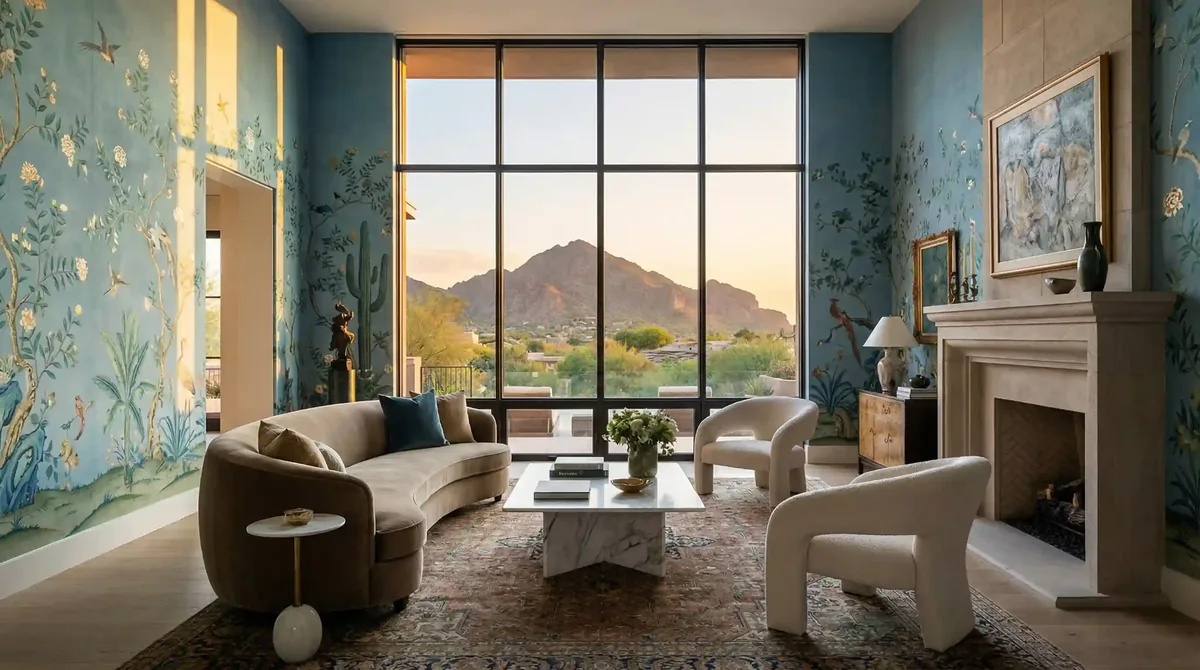
Six ways to change a wall
Each service starts with a different question.
Choose a section below, or call and describe what you have in mind. A product name or wall photo can help later, but neither is a requirement for an initial conversation.
Wallpaper installation
A wallpaper installation begins with the paper, the wall and the room. Traditional, pre-pasted and non-woven wallcoverings can have different hanging instructions. Some products call for paste on the wall; others are pasted on the paper and booked before hanging. The manufacturer’s directions guide adhesive choice and handling.
Good layout starts with finding a reference line and thinking through where the pattern will land at ceilings, corners, windows and doors. Pattern repeats can affect both roll quantities and how seams align. A clear discussion about the room and material helps identify useful next steps before the estimate.
Wallpaper removal
Removing existing wallpaper is a separate stage from preparing a wall for new paper. The surface beneath and the adhesive used previously can affect how readily the covering releases. Older work may have more than one layer.
After removal, the wall may need cleaning, repair or primer before another covering goes up. That condition cannot be fully determined from a product name alone. Describe what you know about the wall when you call, and ask what would help clarify the scope.
Peel-and-stick wallpaper
Self-adhesive papers do not use the same method as pasted wallcoverings. Follow the specific manufacturer’s requirements for paint finish, cleaning, curing time and wall texture. Some products are intended for smooth walls in sound condition, and freshly painted surfaces may need to cure completely.
Alignment still matters: a small starting angle can carry across later panels, and larger patterns need planning before peeling away the backing. Do not assume every removable product is suitable for every wall. Share the product information if it is convenient.
Commercial wallpaper installation
Feature walls, murals and full-room commercial installations bring questions about area, wall condition, furnishings, access and the sequence of work around an operating space. Commercial vinyl, textiles and custom wallcoverings may each specify particular adhesives and preparation.
Ask the manufacturer or supplier for the current installation instructions with the material. We can discuss the surfaces and areas in your project directly; availability and scope depend on the details.
Wall preparation
A smooth, sound, clean surface helps a wallcovering sit more consistently. Existing paint, loose areas, cracks, texture, adhesive residue and repairs can change the preparation needed. Primer and adhesive must be compatible with the substrate and selected paper.
Peel-and-stick products can be especially sensitive to wall smoothness, paint sheen and curing time. Product-specific requirements vary, so use the instructions for the exact paper rather than assuming a universal recipe.
Specialty wallcoverings
Large-scale murals and specialty materials often have panel order, pattern, seam or paste requirements that differ from standard paper. Grasscloth and similar natural-looking finishes may show natural variation, and their seams are handled according to the product’s instructions.
Bring the manufacturer’s name or product sheet to the conversation if you have it. It can clarify the material and installation method. You do not need that information in hand to call and ask about the project.
A room worth talking about
Have a material in mind?
Talk it through with us. An on-site assessment or measurements may be something to ask about for your particular project.